
For example, consider a company that enters into a 10-year operating lease for equipment with annual lease payments of $100,000. Under the new standards, the company recognizes a lease liability and a corresponding right-of-use asset. If the interest rate implicit in the lease is 5%, the initial interest expense in the first year would be approximately $5,000 ($100,000 x 5%).

How Operating Leases Work
- The introduction of interest expense in operating lease accounting has brought about a significant shift in how companies report and analyze their leasing activities.
- Simultaneously, the Cash account is credited for the corresponding amount, representing the outflow of funds.
- Companies manage OpEx better when their leaders understand the difference between fixed and variable costs.
- Expenses are reported on a company’s income statement and represent the costs of running the business during a specific accounting period.
- This accounting entry ensures that financial statements accurately reflect the company’s assets and liabilities at the reporting date, regardless of payment schedules.
- Variable expenses offer more flexibility in cost management, as they can often be adjusted based on business needs or market conditions.
- The first widespread implementation of the revised standards is well underway.
The straight-line depreciation method is typically used for the equipment that is leased. This is based on the calculated equipment cost of $149,317, which is depreciated equally over eight years at $18,665 per year. A. Current liabilities – A liability is considered current if are operating expenses liabilities it is due within 12 months after the end of the balance sheet date. Adjusting financials with the approximation method is slightly different from the full adjustment method.
Assets, liabilities, and capital

Keep in mind your probable contingent liabilities are a best estimate and make note that the actual number may vary. The use of accrued expenses has some important implications for Partnership Accounting cash flow planning. Assets refer to resources owned and controlled by the entity as a result of past transactions and events, from which future economic benefits are expected to flow to the entity. We can subtract the non-operating assets from total assets to calculate $6 million as the company’s total operating assets. Therefore, the net operating assets belonging to a company represent the difference between its operating assets and operating liabilities. The net operating assets (NOA) of a company equal the value of all assets directly tied to core operations minus all operational liabilities.
Understanding Expenses Vs. Liabilities: Key Financial Concepts
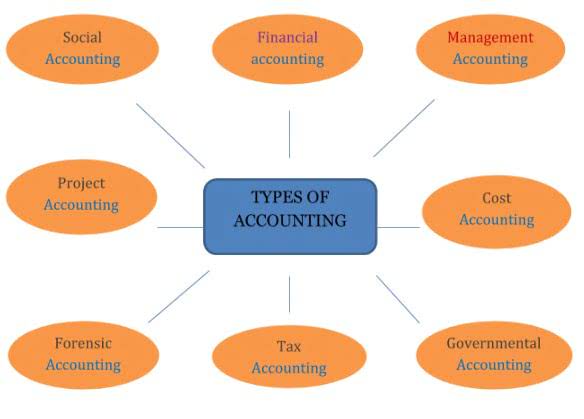
Some liabilities such as accounts payable or income taxes payable are essential for daily business operations. In accounting, expenses fall under two main categories namely operating expenses and non-operating expenses. Operating expenses are the expenses that are related to the main activities of a company such as the cost of goods sold, administrative fees, office supplies, direct labor, and rent. To arrive at operating income, one has to deduct operating expenses from revenue.

- Each of these industries was impacted by the lease standard to a significantly lesser extent than retail eating places.
- These expenses, or capital expenditures or CAPEX, are typically incurred to acquire or upgrade assets such as buildings, machinery, vehicles, and computer systems.
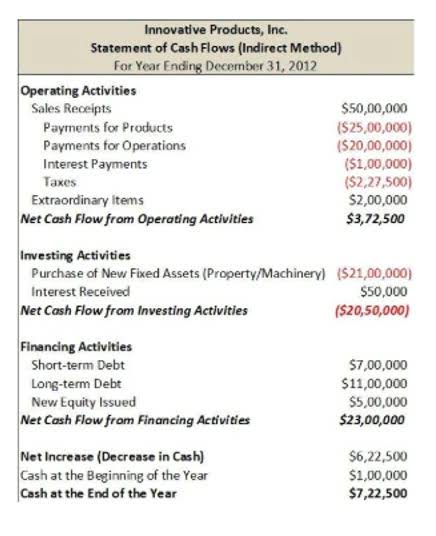
- Cost of Goods Sold, interest expense, income taxes, and extraordinary losses.
- Operating expenses are commonly grouped into three main functional buckets for financial reporting purposes.
- Bob does not want to pay for the cost of materials and supplies until he collects from the customer.
- In layman’s terms, liabilities are the debts and obligations of a business that are incurred to keep the business running.
It measures a company’s ability to pay short-term obligations with its current assets. Operating expenses enables a company to calculate its operating expense ratio (OER), which provides a comparison of expenses incurred to income earned. OER is expressed as a percentage and allows businesses to compare themselves to businesses in the same industry. Expenses are the costs required to conduct business operations and produce revenue for the company. These liabilities are noncurrent, but the category is often defined as “long-term” in the balance sheet.
How to calculate total assets
Expenses can become liabilities on a balance sheet when you accrue them, which means you’ve incurred the expense and received the benefit from it, but you haven’t paid for it yet. If you’re just getting started with financial management, you may struggle with the difference between expenses and liabilities. what are retained earnings It may seem trivial, but confusion over liabilities vs. expenses can lead to costly mistakes. The information contained herein is shared for educational purposes only and it does not provide a comprehensive list of all financial operations considerations or best practices.
When a company enters into a leasing agreement, the lease payments may include an interest component, which is typically deductible for tax purposes. However, the deductibility of interest expense on leases can vary depending on the type of lease—operating or finance (capital) lease—and the tax laws of the jurisdiction in which the company operates. In an operating lease, the lessee does not assume the risks and rewards of ownership, and the lease payments are treated as operating expenses. Conversely, in a finance lease, the lessee is considered to have purchased the asset, and the lease payments are split into interest expense and principal repayment. Although the adoption of ASC 842 appears to be having a relatively small impact on public company financial statements, the authors’ survey found evidence of significant effects in specific areas. First, for industries and individual companies that rely more heavily on leased assets, financial statement amounts and financial ratios were significantly impacted by adoption of the new guidance.